

25 Most Common English Verbs Every Intermediate Learner Must Know
Mastering verbs is essential if you want to take your English from basic to fluent. Beginners usually start with foundational verbs such as be, have, and do. However, as you move to the next stage, you need to expand your vocabulary and practice a wider range of verbs. That’s why we’ve created this guide on the 25 most common English verbs every intermediate learner must know.
These verbs appear constantly in daily conversations, professional communication, academic texts, and even entertainment. By learning how to use them correctly, you can express yourself more naturally, add variety to your sentences, and avoid repetition.
In this article, we will cover the meanings, common uses, and examples of each verb. You’ll also find tips on how to integrate them into your daily English practice. Whether your goal is speaking fluently, writing with confidence, or understanding native speakers better, these verbs will help you achieve it.
Why learn 25 Most Common English Verbs Every Intermediate Learner Must Know?
At the beginner level, most learners rely heavily on simple verbs such as go, eat, see, and say. While these are important, intermediate learners must go beyond them. Expanding your verb knowledge will:
- Help you communicate more precisely.
- Make your sentences sound richer and more natural.
- Improve your listening comprehension.
- Prepare you for advanced grammar structures and idiomatic expressions.
Moreover, many of these verbs have multiple meanings depending on context. That’s why practicing them in real-life sentences is vital.
1. Become
“Become” is one of the most common verbs used to describe change or transformation.
- She became interested in photography last year.
- This street becomes very crowded in the evening.
2. Begin
To “begin” means to start something, and it is often used in formal or academic contexts.
- The concert begins at 7 p.m. sharp.
- Let’s begin by reviewing yesterday’s lesson.
3. Build
“Build” is useful for both literal and figurative expressions.
- They are building a new library near the park.
- Good habits build strong character.
4. Choose
This verb helps you express decisions or preferences.
- You must choose between these two options.
- She chose the red dress for the party.
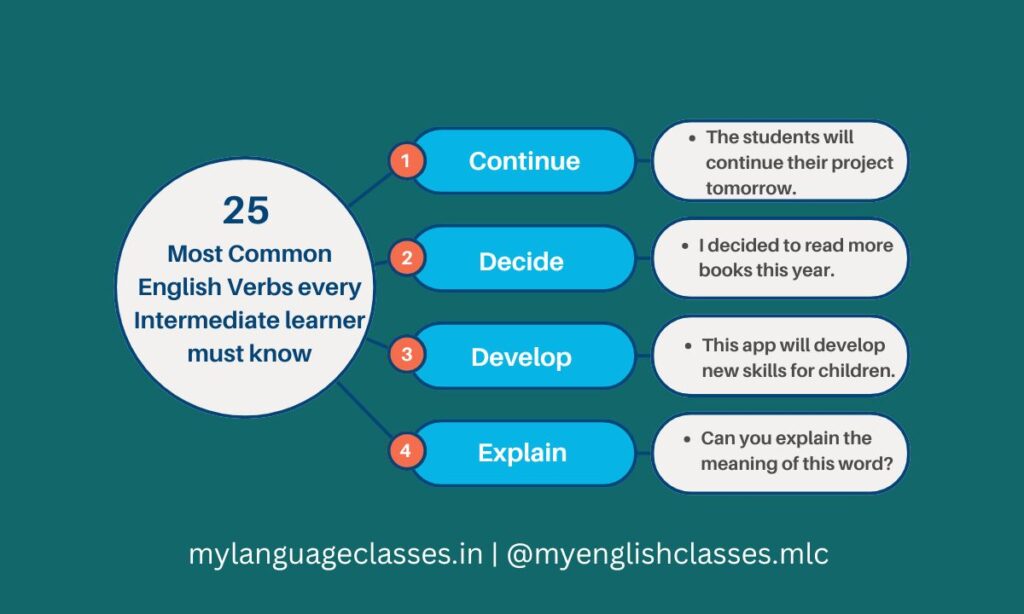
5. Continue
“Continue” shows persistence or ongoing action.
- He continued working despite the difficulties.
- Please continue reading until the end of the chapter.
6. Decide
Intermediate learners often need this verb to express choices.
- We decided to travel by train.
- She decided not to join the club.
7. Develop
This verb is common in academic, professional, and casual settings.
- Children develop language skills quickly.
- The company is developing new technology.
8. Explain
You can use “explain” when giving details or clarifying meaning.
- Could you explain the rules again?
- He explained how the system works.
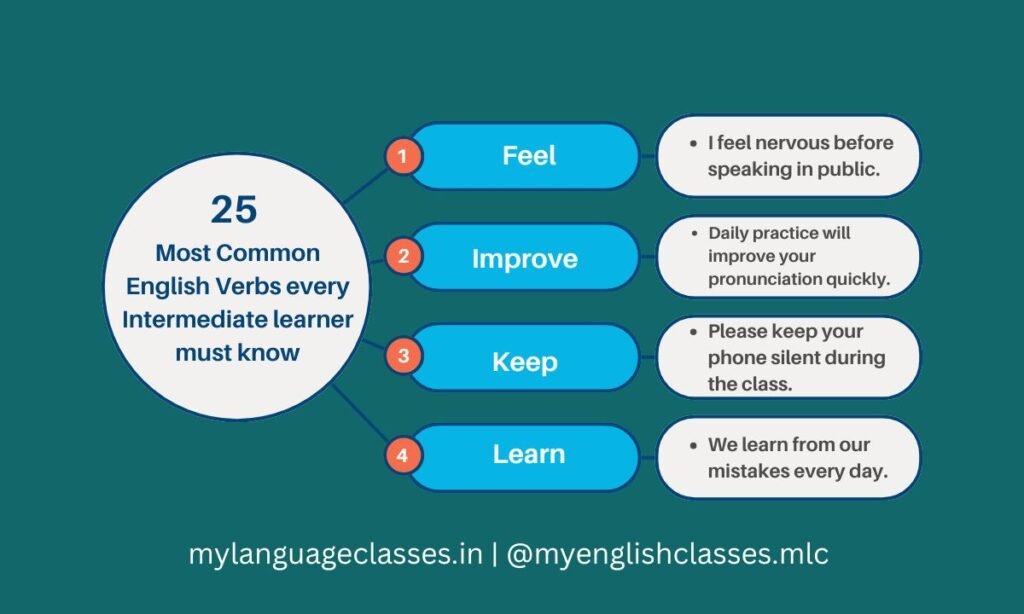
9. Feel
At the intermediate level, learners use “feel” not only for emotions but also for physical sensations.
- I feel tired after the long walk.
- She feels confident about her presentation.
10. Improve
“Improve” is crucial when talking about progress.
- Her English has improved a lot this year.
- We need to improve our time management.
11. Keep
“Keep” is highly flexible, appearing in many phrases.
- Keep the door closed, please.
- He keeps his promises.
12. Learn
This verb is central to education and personal growth.
- She is learning how to drive.
- We learn something new every day.
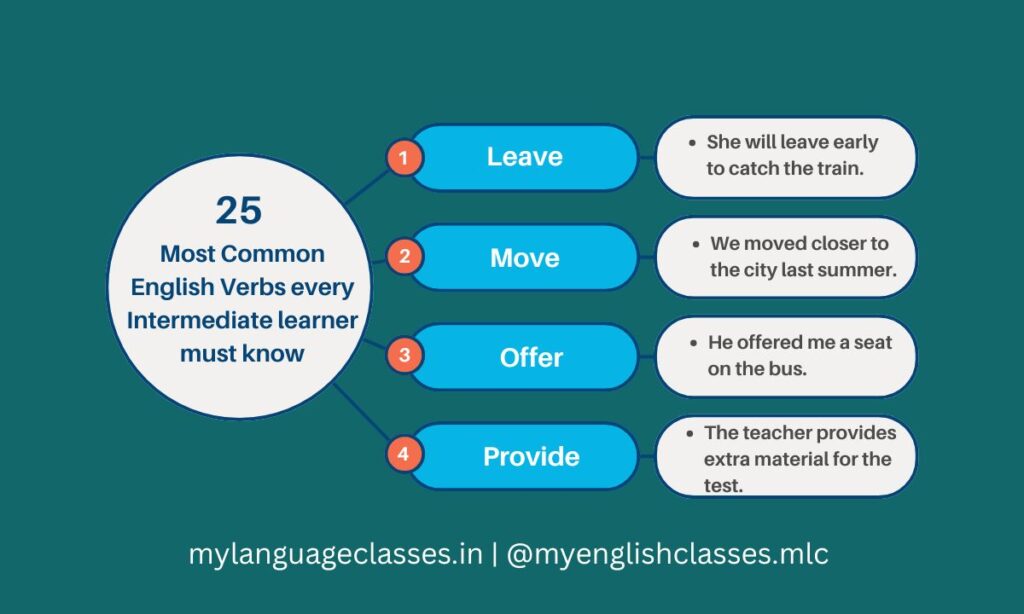
13. Leave
“Leave” can mean to depart or to let something remain.
- He left the keys on the table.
- They leave for Paris tomorrow morning.
14. Move
“Move” is common in physical, emotional, and metaphorical contexts.
- We moved to a new apartment last month.
- The speech moved the audience to tears.
15. Offer
At this level, “offer” helps you express suggestions or proposals.
- The shop offers free delivery.
- He offered to help me with the project.
16. Play
While “play” is basic, intermediate learners must know its extended uses.
- The children are playing outside.
- She plays the guitar beautifully.
17. Provide
“Provide” is formal and often used in professional or academic writing.
- The hotel provides breakfast for its guests.
- Education provides opportunities for the future.
18. Reach
This verb is versatile, showing both physical and figurative meaning.
- We reached the top of the mountain.
- He finally reached his goal.
19. Remember
“Remember” is essential for recalling information or experiences.
- I remember meeting her last year.
- Please remember to lock the door.
20. Return
“Return” is often used in formal situations or storytelling.
- She returned the book to the library.
- They returned home after a long trip.
21. Show
Intermediate learners use “show” for both actions and explanations.
- Can you show me the way to the station?
- The results show significant progress.
22. Spend
This verb is critical for discussing time and money.
- We spent the weekend at the beach.
- He spends too much money on clothes.
23. Study
Although common, “study” becomes more detailed at this stage.
- She studies biology at university.
- I study every evening before exams.
24. Understand
“Understand” allows you to express comprehension clearly.
- I understand the instructions.
- Do you understand what he meant?
25. Work
Finally, “work” is indispensable in all contexts.
- He works as a teacher.
- They are working on a new project.
Tips to Practice These Verbs
Learning the verbs is only the first step. To master them, you need to practice actively. Here are some strategies that work well for intermediate learners:
- Create flashcards with the 25 Most Common English Verbs Every Intermediate Learner Must Know, and example sentences.
- Write short paragraphs using at least three verbs from the list each day.
- Record yourself speaking to practice pronunciation and fluency.
- Watch English shows or news and note how often these verbs appear.
- Engage in conversations where you naturally use these verbs.
Expanding Your English Beyond Basic Verbs
By mastering the 25 most common English verbs every intermediate learner must know, you take a huge step forward in your language journey. These verbs go beyond basic survival English and open doors to deeper conversations, academic success, and professional growth.
The key is consistent practice. Use them in writing, in conversations with friends, and while listening to English media. Every time you apply these verbs, you’ll notice your confidence growing.
Language learning is a marathon, not a sprint. These verbs are your building blocks to fluency. Keep practicing, stay curious, and let English become a natural part of your daily life.

Vikas Kumar is the founder of My Language Classes, a language learning platform dedicated to helping learners develop practical communication skills in Spanish, Japanese, and English through comprehensive grammar guides, structured learning resources, books, and evidence-informed educational content.
At My Language Classes, we believe that successful language learning is built on clarity, consistency, meaningful practice, and a deep understanding of how languages work. Every article is carefully researched and created to simplify complex concepts, provide practical guidance, and help learners develop confidence through real-world communication.
Inspired by the principles behind How Language Learning Really Works, our mission is to make high-quality language learning accessible to learners around the world by providing accurate, trustworthy, and comprehensive resources that support lasting progress, lifelong learning, and meaningful communication.
Leave a Reply