


25 Most Common Japanese Verbs for Intermediate Learner
Mastering Japanese at the intermediate level requires more than just basic vocabulary. To hold real conversations, you need to use verbs naturally in different contexts. The 25 most common Japanese verbs every intermediate learner must know will give you the foundation to express thoughts, describe actions, and interact confidently.
When you step beyond beginner Japanese, verbs become the tools that help you connect meaningfully. These 25 most common Japanese verbs every intermediate learner must know are not only frequent in daily conversations but also essential for reading, writing, and listening practice. By mastering them, you build fluency step by step.
Why Intermediate Learners Need Strong Verb Knowledge
Intermediate Japanese learners often know greetings, nouns, and simple expressions. However, progress slows without verbs. Verbs allow you to form sentences about time, emotions, activities, and experiences.
At this stage:
- You expand beyond polite forms like -masu to understand plain and casual speech.
- You begin to recognize conjugations for past, negative, and potential forms.
- You learn to apply verbs in real-life situations, such as travel, work, or study abroad.
Strong command of verbs transforms fragmented phrases into clear, flowing communication.
Liast of 25 Most Common Japanese Verbs Every Intermediate Learner Must Know
As an intermediate learner, you already know essentials like suru (to do) and taberu (to eat). Now it’s time to expand your vocabulary with verbs that let you express deeper ideas, handle daily situations more naturally, and understand real Japanese content. Below are 25 common Japanese verbs at the intermediate (JLPT N3) level with romaji, meanings, and example sentences.
1. 決める (kimeru – to decide)
👉Watashi wa ashita no yotei o kimemasu. (I decide tomorrow’s schedule.)
👉Kare wa ryokou ni iku koto o kimemashita. (He decided to go on a trip.)
2. 集める (atsumeru – to collect, to gather)
👉Watashi wa furui setto o atsumemasu. (I collect old sets.)
👉Kodomo-tachi wa kouen de atsumatteimasu. (Children are gathering in the park.)
3. 調べる (shiraberu – to check, to investigate)
👉Watashi wa kotoba no imi o shirabemasu. (I check the meaning of a word.)
👉Kanojo wa densha no jikan o shirabemashita. (She checked the train time.)
4. 決まる (kimaru – to be decided)
👉Kaigi no nichiji ga kimarimashita. (The meeting date has been decided.)
👉Konshuu no shiai no kekka ga kimarimasu. (This week’s match result will be decided.)
5. 増える (fueru – to increase)
👉Toshokan no hon ga fueteimasu. (Books in the library are increasing.)
👉Tabemono no nedan ga fuemashita. (The price of food increased.)
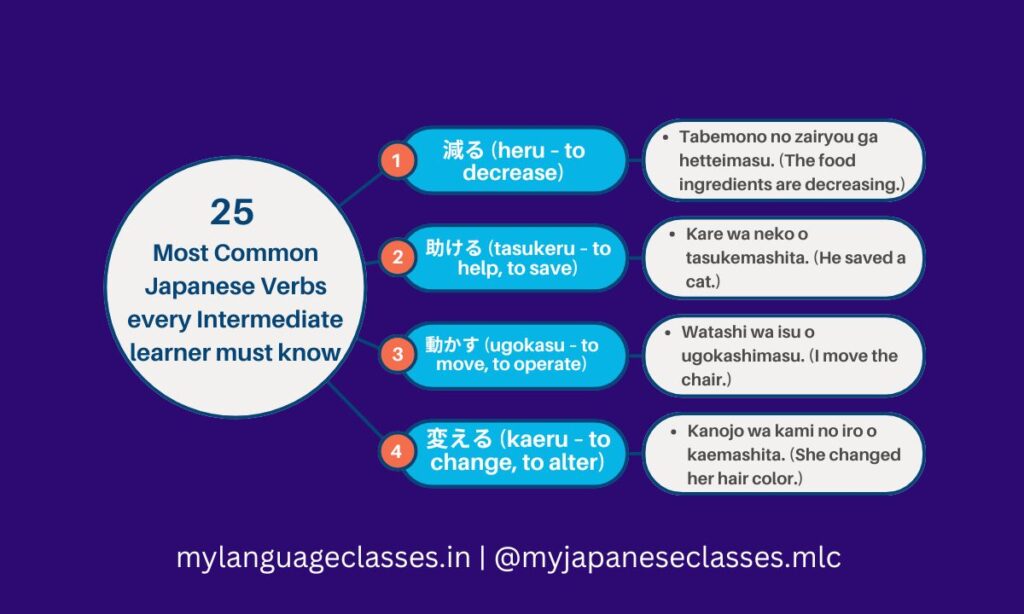
6. 減る (heru – to decrease)
👉Kono machi no jinkou wa hetta. (The population of this town decreased.)
👉Saikin watashi no jikan ga hetteimasu. (Recently my time has decreased.)
7. 助ける (tasukeru – to help, to save)
Watashi wa tomodachi o tasukemashita. (I helped my friend.)
Kono kusuri ga byouki o tasukemasu. (This medicine helps the illness.)
8. 動かす (ugokasu – to move, to operate)
👉Watashi wa kuruma o ugokashimasu. (I move the car.)
👉Kare wa shinbunsha o ugokashimashita. (He operated the newspaper company.)
9. 変える (kaeru – to change, to alter)
👉Watashi wa kikaku o kaemashita. (I changed the plan.)
👉Kanojo wa kagi no basho o kaemashita. (She changed the place of the key.)
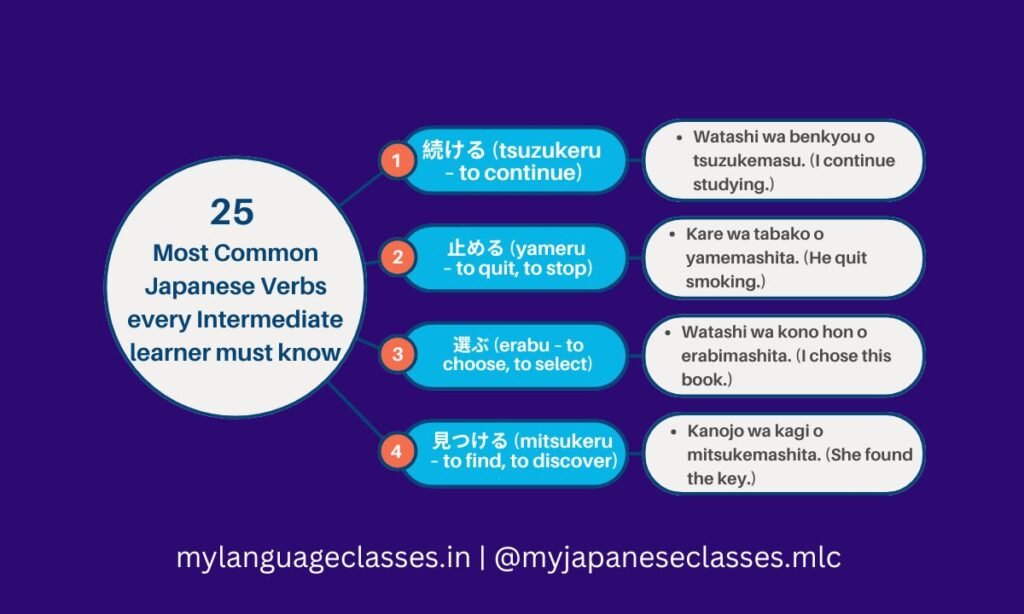
10. 続ける (tsuzukeru – to continue)
👉Watashi wa benkyou o tsuzukemasu. (I continue studying.)
👉Kare wa shigoto o tsuzukemashita. (He continued his work.)
11. 止める (yameru – to quit, to stop)
👉Watashi wa tabako o yamemashita. (I quit smoking.)
👉Kanojo wa kaisha o yameru tsumori desu. (She plans to quit the company.)
12. 残る (nokoru – to remain, to be left)
👉Shukudai ga mada nokotteimasu. (Homework is still left.)
👉Kekka dake ga kioku ni nokorimashita. (Only the result remained in memory.)
13. 選ぶ (erabu – to choose, to select)
👉Watashi wa aka no doresu o erabimashita. (I chose the red dress.)
👉Kanojo wa ryouri no menu o erandeimasu. (She is choosing the food menu.)
14. 働かせる (hatarakaseru – to make someone work)
👉Shachou wa kare o hatarakasemashita. (The boss made him work.)
👉Kodomo ni benkyou o hatarakasemasu. (They make children study.)
15. 見つける (mitsukeru – to find, to discover)
👉Watashi wa omoshiroi hon o mitsukemashita. (I found an interesting book.)
👉Kanojo wa aratana shigoto o mitsukemashita. (She found a new job.)
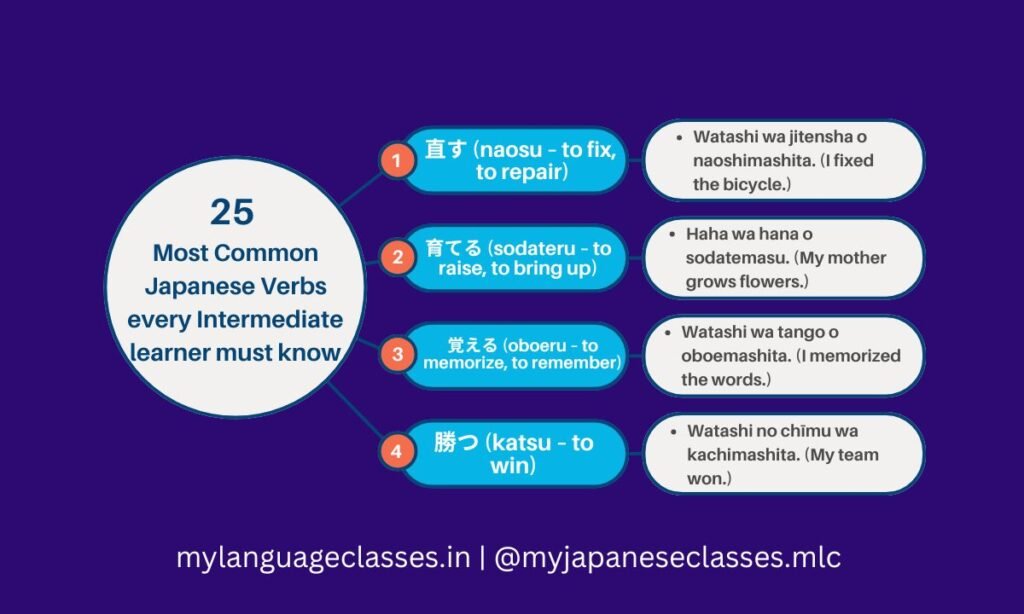
16. 直す (naosu – to fix, to repair)
👉Watashi wa jitensha o naoshimashita. (I fixed the bicycle.)
👉Kare wa machigai o naoshimashita. (He corrected the mistake.)
17. 育てる (sodateru – to raise, to bring up)
👉Watashi wa hana o sodatemasu. (I grow flowers.)
👉Kanojo wa kodomo o sodateています. (She is raising a child.)
18. 落ちる (ochiru – to fall, to drop)
Kagi ga yuka ni ochimashita. (The key fell on the floor.)
Kono sakura no hana ga ochiteimasu. (These cherry blossoms are falling.)
19. 倒れる (taoreru – to fall down, to collapse)
👉Kono ki ga taoremashita. (This tree fell down.)
👉Kare wa byouki de taoremashita. (He collapsed from illness.)
20. 立てる (tateru – to build, to erect)
👉Watashi wa ie o tatemashita. (I built a house.)
👉Kare wa keikaku o tatemasu. (He makes a plan.)
21. 覚える (oboeru – to memorize, to remember)
Watashi wa tango o oboemashita. (I memorized vocabulary.)
Kanojo wa uta no lyrics o oboemashita. (She remembered the song lyrics.)
22. 落とす (otosu – to drop, to lose)
👉Watashi wa saifu o otoshimashita. (I dropped my wallet.)
👉Kanojo wa keitai o otoshimashita. (She dropped her phone.)
23. 勝つ (katsu – to win)
👉Watashi no chīmu wa shiai ni kachimashita. (My team won the game.)
👉Kare wa taikai de kachimashita. (He won the tournament.)
24. 負ける (makeru – to lose)
👉Watashi wa sensou de makemashita. (I lost the war.)
👉Kanojo wa shiai ni makemashita. (She lost the match.)
25. 借りる (kariru – to borrow)
👉Watashi wa tomodachi ni hon o karimashita. (I borrowed a book from a friend.)
👉Kanojo wa pen o karimashita. (She borrowed a pen.)
| Verb | Example 1 | Example 2 |
|---|---|---|
| 決める (kimeru – to decide) | Watashi wa ashita no yotei o kimemasu. (I decide tomorrow’s schedule.) | Kare wa ryokou ni iku koto o kimemashita. (He decided to go on a trip.) |
| 集める (atsumeru – to collect, to gather) | Watashi wa furui setto o atsumemasu. (I collect old sets.) | Kodomo-tachi wa kouen de atsumatteimasu. (Children are gathering in the park.) |
| 調べる (shiraberu – to check, to investigate) | Watashi wa kotoba no imi o shirabemasu. (I check the meaning of a word.) | Kanojo wa densha no jikan o shirabemashita. (She checked the train time.) |
| 決まる (kimaru – to be decided) | Kaigi no nichiji ga kimarimashita. (The meeting date has been decided.) | Konshuu no shiai no kekka ga kimarimasu. (This week’s match result will be decided.) |
| 増える (fueru – to increase) | Toshokan no hon ga fueteimasu. (Books in the library are increasing.) | Tabemono no nedan ga fuemashita. (The price of food increased.) |
| 減る (heru – to decrease) | Kono machi no jinkou wa hetta. (The population of this town decreased.) | Saikin watashi no jikan ga hetteimasu. (Recently my time has decreased.) |
| 助ける (tasukeru – to help, to save) | Watashi wa tomodachi o tasukemashita. (I helped my friend.) | Kono kusuri ga byouki o tasukemasu. (This medicine helps the illness.) |
| 動かす (ugokasu – to move, to operate) | Watashi wa kuruma o ugokashimasu. (I move the car.) | Kare wa shinbunsha o ugokashimashita. (He operated the newspaper company.) |
| 変える (kaeru – to change, to alter) | Watashi wa kikaku o kaemashita. (I changed the plan.) | Kanojo wa kagi no basho o kaemashita. (She changed the place of the key.) |
| 続ける (tsuzukeru – to continue) | Watashi wa benkyou o tsuzukemasu. (I continue studying.) | Kare wa shigoto o tsuzukemashita. (He continued his work.) |
| 止める (yameru – to quit, to stop) | Watashi wa tabako o yamemashita. (I quit smoking.) | Kanojo wa kaisha o yameru tsumori desu. (She plans to quit the company.) |
| 残る (nokoru – to remain, to be left) | Shukudai ga mada nokotteimasu. (Homework is still left.) | Kekka dake ga kioku ni nokorimashita. (Only the result remained in memory.) |
| 選ぶ (erabu – to choose, to select) | Watashi wa aka no doresu o erabimashita. (I chose the red dress.) | Kanojo wa ryouri no menu o erandeimasu. (She is choosing the food menu.) |
| 働かせる (hatarakaseru – to make someone work) | Shachou wa kare o hatarakasemashita. (The boss made him work.) | Kodomo ni benkyou o hatarakasemasu. (They make children study.) |
| 見つける (mitsukeru – to find, to discover) | Watashi wa omoshiroi hon o mitsukemashita. (I found an interesting book.) | Kanojo wa aratana shigoto o mitsukemashita. (She found a new job.) |
| 直す (naosu – to fix, to repair) | Watashi wa jitensha o naoshimashita. (I fixed the bicycle.) | Kare wa machigai o naoshimashita. (He corrected the mistake.) |
| 育てる (sodateru – to raise, to bring up) | Watashi wa hana o sodatemasu. (I grow flowers.) | Kanojo wa kodomo o sodateteimasu. (She is raising a child.) |
| 落ちる (ochiru – to fall, to drop) | Kagi ga yuka ni ochimashita. (The key fell on the floor.) | Kono sakura no hana ga ochiteimasu. (These cherry blossoms are falling.) |
| 倒れる (taoreru – to fall down, to collapse) | Kono ki ga taoremashita. (This tree fell down.) | Kare wa byouki de taoremashita. (He collapsed from illness.) |
| 立てる (tateru – to build, to erect) | Watashi wa ie o tatemashita. (I built a house.) | Kare wa keikaku o tatemasu. (He makes a plan.) |
| 覚える (oboeru – to memorize, to remember) | Watashi wa tango o oboemashita. (I memorized vocabulary.) | Kanojo wa uta no lyrics o oboemashita. (She remembered the song lyrics.) |
| 落とす (otosu – to drop, to lose) | Watashi wa saifu o otoshimashita. (I dropped my wallet.) | Kanojo wa keitai o otoshimashita. (She dropped her phone.) |
| 勝つ (katsu – to win) | Watashi no chīmu wa shiai ni kachimashita. (My team won the game.) | Kare wa taikai de kachimashita. (He won the tournament.) |
| 負ける (makeru – to lose) | Watashi wa sensou de makemashita. (I lost the war.) | Kanojo wa shiai ni makemashita. (She lost the match.) |
| 借りる (kariru – to borrow) | Watashi wa tomodachi ni hon o karimashita. (I borrowed a book from a friend.) | Kanojo wa pen o karimashita. (She borrowed a pen.) |
Tips to Master These Verbs
Learning verbs is about practice, not just memorization.
- Listen to native speakers and notice verb conjugations.
- Write your own example sentences using each verb.
- Practice in both polite -masu form and plain form.
- Review past tense, negative, and potential forms.
- Use language exchange apps to apply verbs in conversation.
Consistent practice ensures these verbs become natural and automatic.
Final Thoughts
The 25 most common Japanese verbs every intermediate learner must know are more than vocabulary items. They are keys to building real communication skills. By practicing them daily, you can confidently move from structured textbook learning to natural conversation.
These verbs open doors to understanding Japanese media, speaking with native speakers, and expressing yourself more clearly. With time, they will become second nature, bringing you closer to fluency.

Vikas Kumar is the founder of My Language Classes, a language learning platform dedicated to helping learners develop practical communication skills in Spanish, Japanese, and English through comprehensive grammar guides, structured learning resources, books, and evidence-informed educational content.
At My Language Classes, we believe that successful language learning is built on clarity, consistency, meaningful practice, and a deep understanding of how languages work. Every article is carefully researched and created to simplify complex concepts, provide practical guidance, and help learners develop confidence through real-world communication.
Inspired by the principles behind How Language Learning Really Works, our mission is to make high-quality language learning accessible to learners around the world by providing accurate, trustworthy, and comprehensive resources that support lasting progress, lifelong learning, and meaningful communication.
Leave a Reply