
Spanish Parts of the Body Vocabulary
Learning Spanish body parts vocabulary is one of the most practical steps for beginners. Whether you are traveling, speaking with native speakers, or learning Spanish in a classroom, knowing how to name the body in Spanish is essential. The 25 Spanish parts of the body vocabulary every beginner must know will help you describe pain, talk about appearances, or even enjoy songs and stories that use body-related expressions.
In this guide, you will discover clear meanings, Spanish to English translations, and pronunciation tips. By the end, you will have a strong foundation to use these body parts confidently in daily conversation.
Why Learn Spanish Parts of the Body Vocabulary?
Learning vocabulary related to the body is useful in everyday life. You may need it to visit a doctor, understand instructions in Spanish class, or simply engage in small talk.
Imagine asking for help in Spanish when you have a headache. If you know the word cabeza (head), you can communicate easily. Vocabulary also helps in cultural settings. Popular songs, idioms, and stories often use body references.
For beginners, this topic is both fun and practical. It connects directly to your own body, making the words easy to remember.
The 25 Most Important Spanish Parts of the Body Vocabulary
Below are the 25 essential Spanish body parts every beginner should know. Each word includes the Spanish term, English meaning, and pronunciation guidance.
1. La cabeza – Head
Your cabeza is your head. It’s the part where you think, feel, and sense the world.
2. El cabello / El pelo – Hair
Cabello is more formal, while pelo is casual. Both mean “hair.”
3. La cara – Face
The cara is your face, where you show emotions and expressions.
4. Los ojos – Eyes
Ojos are your eyes, used to see the world. Pronounced as “oh-hos.”
5. La nariz – Nose
The nariz helps you breathe and smell. A common phrase is me pica la nariz (my nose itches).
6. La boca – Mouth
Your boca is where you eat, drink, and speak.
7. Los labios – Lips
Labios are lips, important in pronunciation and expressions.
8. Los dientes – Teeth
Dientes are your teeth. Dentists in Spanish are called dentistas.
9. La lengua – Tongue
The lengua is both the tongue and the word for “language.”
10. La oreja – Ear (outer)
Oreja means the outer ear, the visible part.
11. El oído – Ear (inner, sense of hearing)
Oído refers to the inner ear and the sense of hearing.
12. El cuello – Neck
Your cuello connects your head to your body.
13. El hombro – Shoulder
Hombro is the shoulder, useful in describing pain or exercise.
14. El brazo – Arm
Brazo means arm. A common idiom is abrir los brazos (to open your arms).
15. La mano – Hand
Mano is hand. Notice it is feminine even though it ends in “-o.”
16. Los dedos – Fingers
Dedos are fingers. Each finger also has a specific name in Spanish.
17. La uña – Nail
Uña means nail, usually referring to fingernails or toenails.
18. El pecho – Chest
Pecho is chest, often used in health contexts or exercise.
19. La espalda – Back
Espalda refers to the back, important when describing pain.
20. La pierna – Leg
Pierna is the leg, a common word in sports.
21. La rodilla – Knee
Rodilla means knee. A phrase is me duele la rodilla (my knee hurts).
22. El pie – Foot
Pie means foot. It is also used in time expressions like a pie (on foot).
23. Los dedos del pie – Toes
This literally means “fingers of the foot.”
24. La piel – Skin
Piel is skin, which covers the body.
25. El corazón – Heart
Corazón means heart, both the organ and the symbol of love.
Spanish Parts of the Body Vocabulary Table
| Spanish Word | English Meaning | Gender | Pronunciation (approx.) |
|---|---|---|---|
| La cabeza | Head | Feminine | kah-BEH-sah |
| El cabello / El pelo | Hair | Masculine | kah-BEH-yoh / PEH-loh |
| La cara | Face | Feminine | KAH-rah |
| Los ojos | Eyes | Masculine | OH-hos |
| La nariz | Nose | Feminine | nah-REES |
| La boca | Mouth | Feminine | BOH-kah |
| Los labios | Lips | Masculine | LAH-byos |
| Los dientes | Teeth | Masculine | Dee-EN-tes |
| La lengua | Tongue / Language | Feminine | LENG-gwah |
| La oreja | Ear (outer) | Feminine | oh-REH-hah |
| El oído | Ear (inner / hearing) | Masculine | oh-EE-doh |
| El cuello | Neck | Masculine | KWEH-yoh |
| El hombro | Shoulder | Masculine | OHM-broh |
| El brazo | Arm | Masculine | BRAH-soh |
| La mano | Hand | Feminine* | MAH-noh |
| Los dedos | Fingers | Masculine | DEH-dos |
| La uña | Nail | Feminine | OO-nyah |
| El pecho | Chest | Masculine | PEH-choh |
| La espalda | Back | Feminine | ehs-PAHL-dah |
| La pierna | Leg | Feminine | PYEHR-nah |
| La rodilla | Knee | Feminine | roh-DEE-yah |
| El pie | Foot | Masculine | PYEH |
| Los dedos del pie | Toes | Masculine | DEH-dos del PYEH |
| La piel | Skin | Feminine | PYEHL |
| El corazón | Heart | Masculine | koh-rah-SON |
📝 Note: La mano is an exception because it ends with “-o” but is feminine. Beginners often get confused here.
Breaking Down Vocabulary Into Categories
To make learning easier, here are the words grouped into categories.
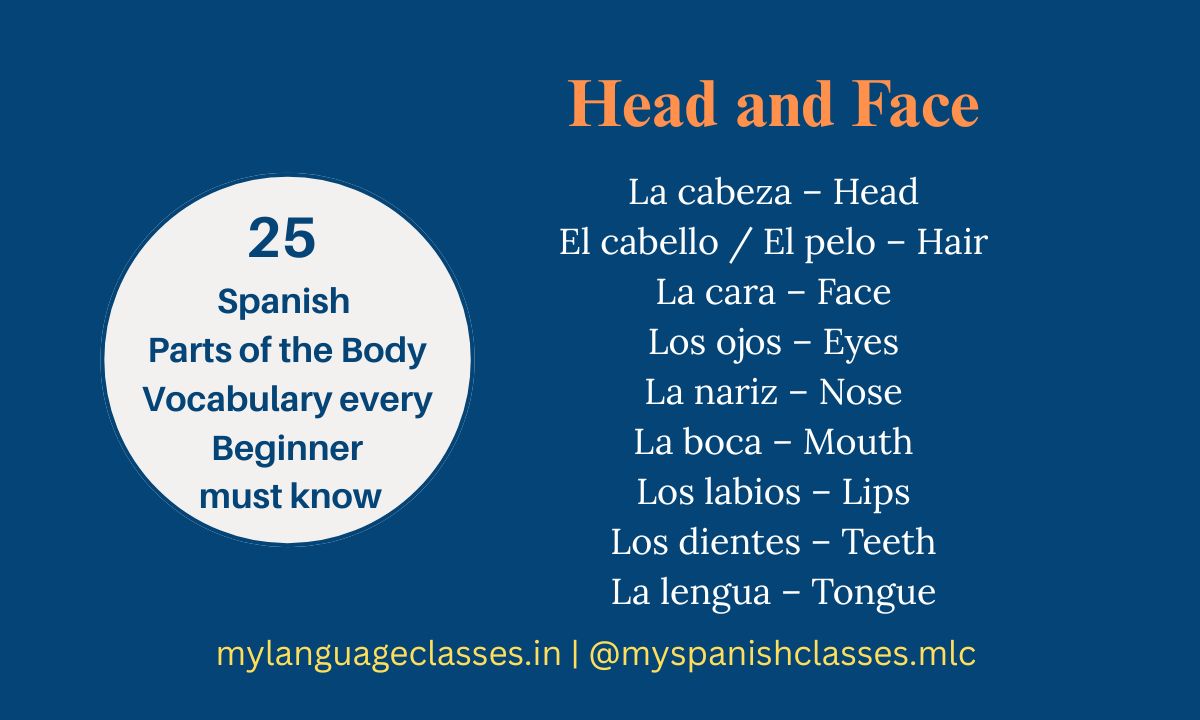
Head and Face
- La cabeza – Head
- El cabello / El pelo – Hair
- La cara – Face
- Los ojos – Eyes
- La nariz – Nose
- La boca – Mouth
- Los labios – Lips
- Los dientes – Teeth
- La lengua – Tongue
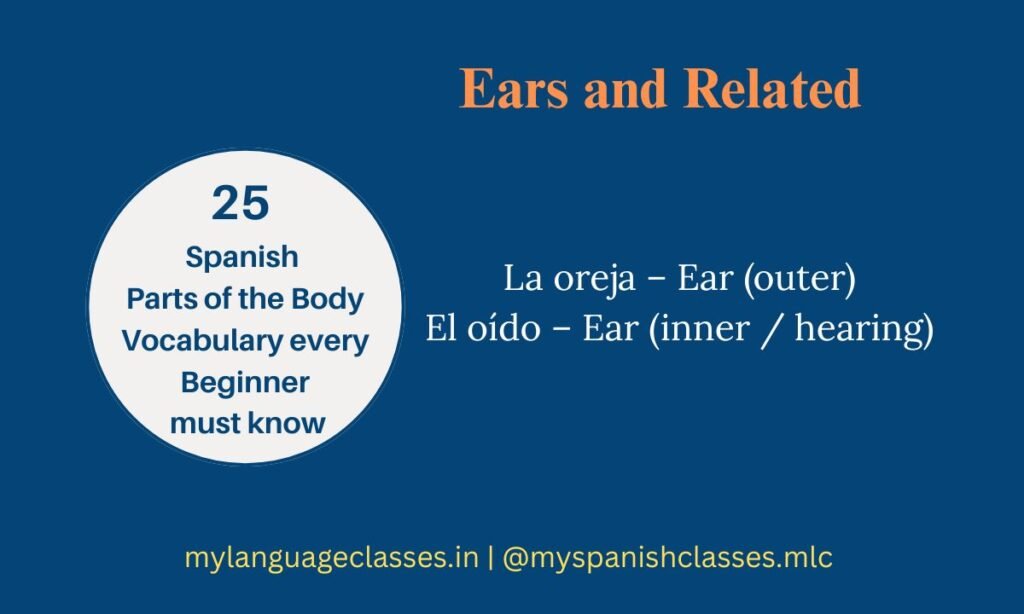
- La oreja – Ear (outer)
- El oído – Ear (inner)
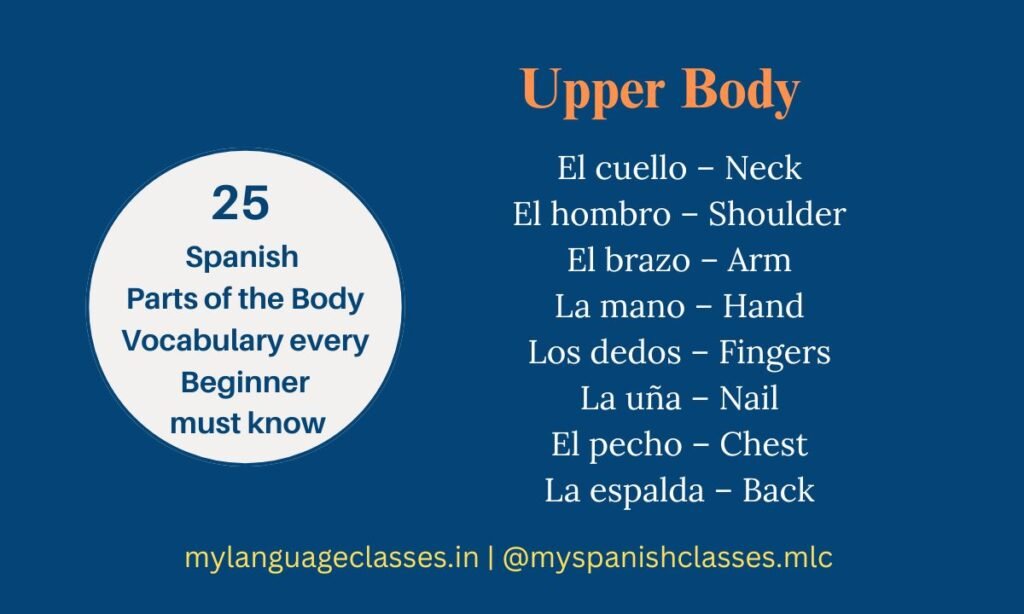
Upper Body
- El cuello – Neck
- El hombro – Shoulder
- El brazo – Arm
- La mano – Hand
- Los dedos – Fingers
- La uña – Nail
- El pecho – Chest
- La espalda – Back
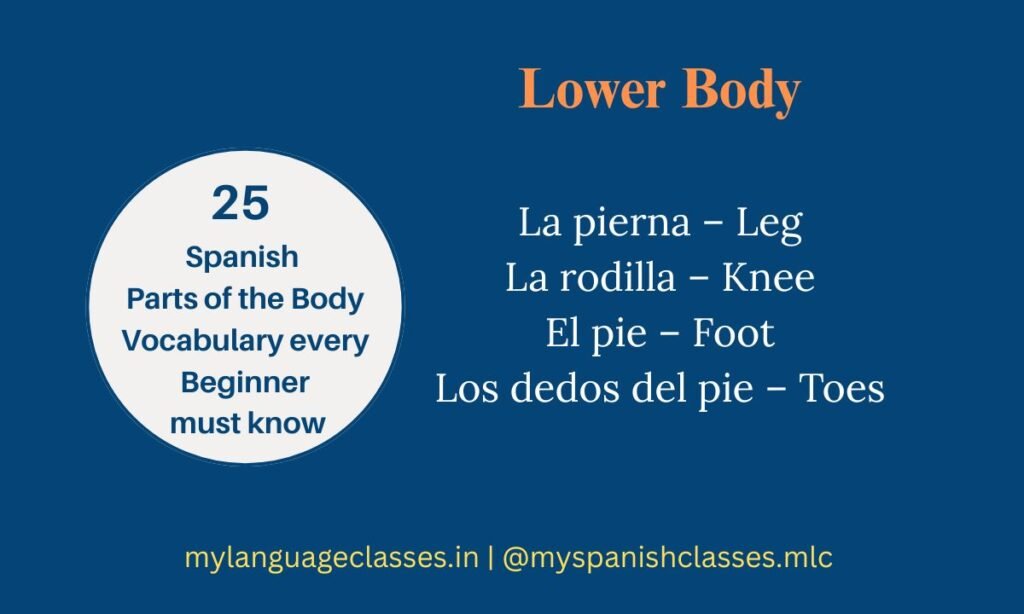
Lower Body
- La pierna – Leg
- La rodilla – Knee
- El pie – Foot
- Los dedos del pie – Toes
Whole Body and Skin
- La piel – Skin
Internal and Emotional
- El corazón – Heart
Useful Phrases With Spanish Body Vocabulary
Learning vocabulary is helpful, but using it in sentences makes it stick. Here are examples with translations.
- Me duele la cabeza. – My head hurts.
- Tengo dolor de espalda. – I have back pain.
- Lávate las manos. – Wash your hands.
- Cierra los ojos. – Close your eyes.
- El corazón late rápido. – The heart beats fast.
Each phrase is practical and connects directly to daily life.
Tips to Memorize Spanish Parts of the Body
1. Use Songs and Rhymes
Songs like Cabeza, cara, hombros, pies (Head, shoulders, knees, feet) make learning fun.
2. Practice With Flashcards
Visual flashcards connect the Spanish word with the body image.
3. Act It Out
Point to the body part while saying the Spanish word. This builds memory faster.
4. Speak With Native Speakers
Even a simple phrase like me duele la rodilla in a real context helps solidify learning.
5. Repeat Daily
Reviewing 5–10 words each day prevents forgetting and creates long-term memory.
Common Mistakes Beginners Make
- Confusing oreja and oído – Remember, one is outer, the other is inner.
- Forgetting gender rules – For example, la mano is feminine.
- Mixing singular and plural – Don’t forget los ojos (eyes), not el ojo unless you mean one eye.
- Using English word order – In Spanish, phrases like dedos del pie literally mean “fingers of the foot.”
Cultural Notes
Spanish-speaking countries use body vocabulary in everyday expressions. Some examples include:
- Tener ojo – To be observant (literally “to have eye”).
- No tener pelos en la lengua – To be blunt (literally “to not have hairs on the tongue”).
- Levantar la mano – To raise one’s hand.
- De todo corazón – Sincerely, from the heart.
These idioms make conversations richer and show how deeply body vocabulary is tied to culture.
Final Thoughts
The 25 Spanish parts of the body vocabulary every beginner must know are more than just words. They are tools to communicate, connect, and understand Spanish culture. Start by memorizing the basics, then practice with sentences. Over time, you will use these words naturally in conversations, songs, and stories.
Learning body vocabulary is a step toward fluency. Each word brings you closer to expressing yourself clearly in Spanish. So, repeat daily, use them in context, and enjoy the journey of language learning.
📌 Keep Learning With Us
Learning a language becomes easier when you have the right support and resources. Don’t stop here — continue your journey with My Language Classes:
📺 Subscribe to our YouTube channel for grammar lessons, examples, and practice videos.
📸 Follow us on Instagram for daily tips, exercises, and quick grammar reminders.
🌐 Connect With Us and explore all our platforms and learning communities.
📚 Check out Our Books for structured guides and practice resources for English, Spanish, and Japanese.
👉 Want to go deeper? Explore our Beginner Spanish Lessons.
Related Posts
25 Spanish Food and Drinks Vocabulary Every Beginner Must Know
25 Spanish Classroom Vocabulary Every Beginner Must Know
25 Spanish Nationalities and Countries Vocabulary Every Beginner Must Know
25 Spanish Family and Relationships Vocabulary Every Beginner Must Know
25 Spanish Colors Every Beginner Must Know | My Language Classes
25 Most Common Spanish Verbs Every Beginner Must Know | My Language Classes
25 Most Common Spanish Verbs Every Intermediate Learner Must Know | My Language Classes
📬 Subscribe for Free Spanish Grammar Lessons
Want to keep improving your Spanish grammar step by step? Subscribe now and get access to:
📖 Free lessons delivered straight to your inbox.
📝 Grammar rules explained with examples and exercises.
🎯 Study tips to help you prepare for DELE exam
👉 Enter your email below and start learning smarter today!
© 2025 My Language Classes · Privacy Policy

Vikas Kumar is the founder of My Language Classes, a language learning platform dedicated to helping learners develop practical communication skills in Spanish, Japanese, and English through comprehensive grammar guides, structured learning resources, books, and evidence-informed educational content.
At My Language Classes, we believe that successful language learning is built on clarity, consistency, meaningful practice, and a deep understanding of how languages work. Every article is carefully researched and created to simplify complex concepts, provide practical guidance, and help learners develop confidence through real-world communication.
Inspired by the principles behind How Language Learning Really Works, our mission is to make high-quality language learning accessible to learners around the world by providing accurate, trustworthy, and comprehensive resources that support lasting progress, lifelong learning, and meaningful communication.
Leave a Reply