
Spanish Food and Cooking Vocabulary for Beginner
Learning Spanish gets more exciting when food becomes part of your journey. Every meal is a chance to explore new words, flavors, and culture. If you’re starting out, mastering Spanish food and cooking vocabulary for beginners helps you speak confidently in real-life situations — whether you’re ordering in a café, reading a recipe, or chatting with locals.
In this guide, you’ll discover 25 essential Spanish food and cooking vocabulary words that will help you build a strong foundation. You’ll also find simple examples to make practice easier and more enjoyable.
🍅 Why Learning Spanish Food and Cooking Vocabulary Matters
Food connects people. In every culture, meals are moments of sharing, and words around them are full of meaning. When you learn Spanish food and cooking vocabulary for beginners, you open the door to everyday conversations.
It’s not just about ingredients or recipes — it’s about understanding traditions. Spanish cuisine is famous for its warmth, simplicity, and variety. Learning how to describe what you eat or cook makes your Spanish come alive in practical ways.
🍽️ Basic Food Items (Los alimentos básicos)
Let’s start with common food words that appear in daily life. These are the backbone of any kitchen conversation.
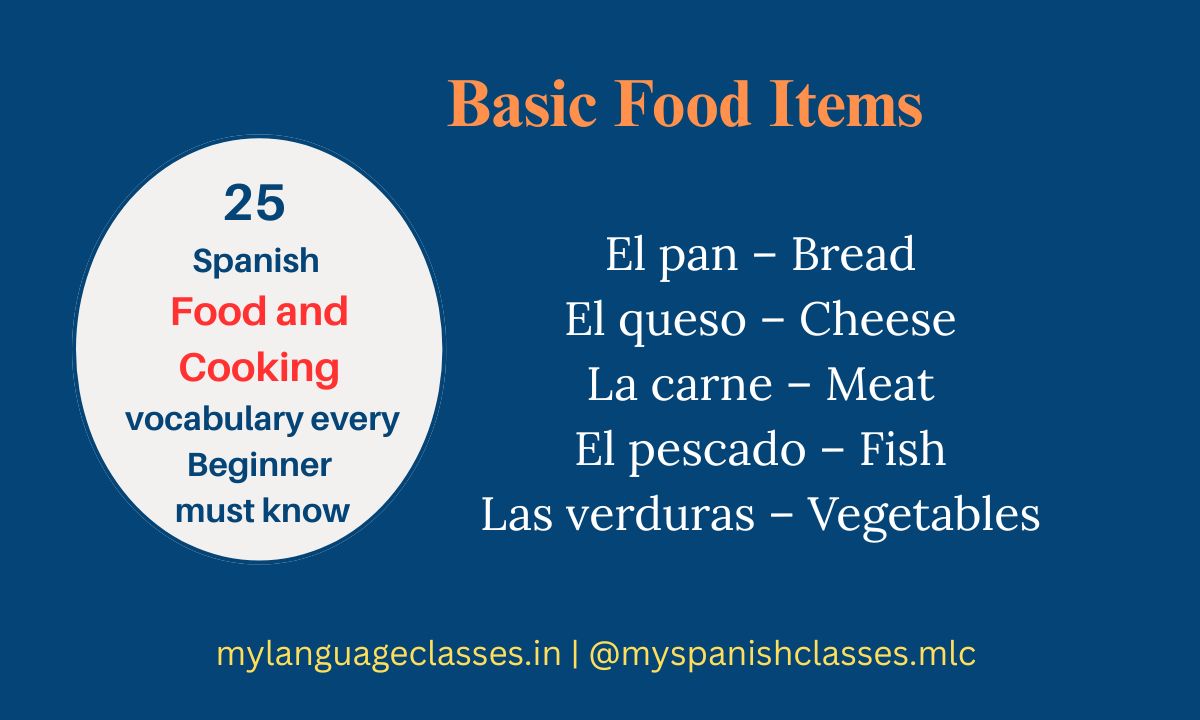
1. El pan – Bread
A staple in Spanish meals.
👉 Comemos pan con cada comida. (We eat bread with every meal.)
2. El queso – Cheese
Used in tapas, sandwiches, and pastries.
👉 Me encanta el queso manchego. (I love Manchego cheese.)
3. La carne – Meat
Essential in dishes like carne asada and albóndigas.
👉 No como mucha carne roja. (I don’t eat much red meat.)
4. El pescado – Fish
Common in coastal regions of Spain.
👉 El pescado fresco es delicioso. (Fresh fish is delicious.)
5. Las verduras – Vegetables
Healthy and colorful, they balance every meal.
👉 Las verduras son importantes para una dieta equilibrada. (Vegetables are important for a balanced diet.)
These basic words are used daily in homes and restaurants. Learning them early makes communication smoother.
🧂 Ingredients and Seasonings (Los ingredientes y condimentos)
Flavors define Spanish cooking. These words will help you recognize the ingredients that bring life to traditional dishes.
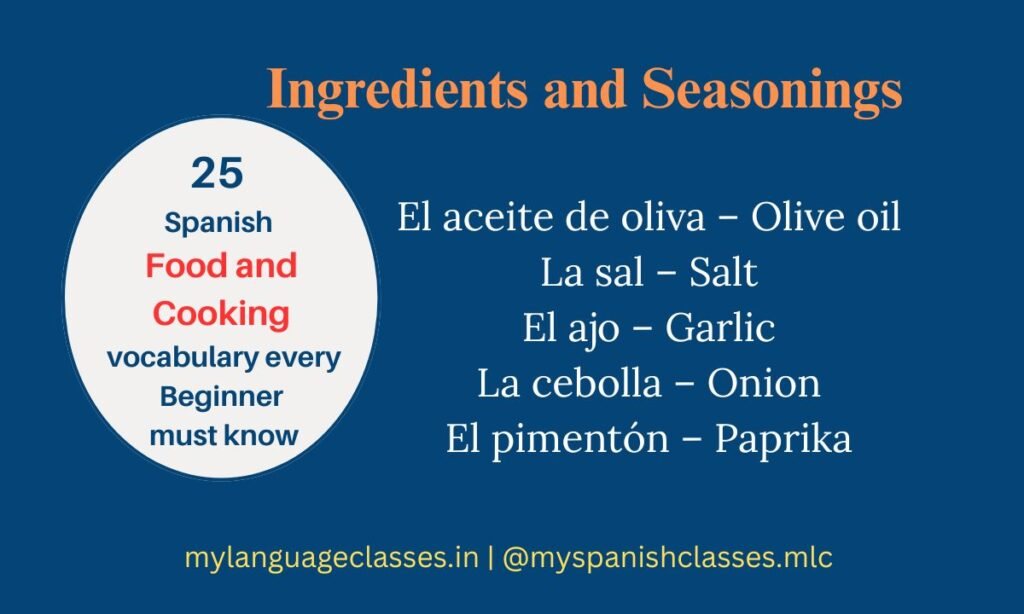
6. El aceite de oliva – Olive oil
A kitchen essential in Spain.
👉 Freímos las verduras en aceite de oliva. (We fry vegetables in olive oil.)
7. La sal – Salt
Used in every dish to enhance flavor.
👉 Agrega una pizca de sal al gusto. (Add a pinch of salt to taste.)
8. El ajo – Garlic
Tiny but full of power and aroma.
👉 El ajo da mucho sabor a la comida. (Garlic gives a lot of flavor to food.)
9. La cebolla – Onion
Used in sauces, stews, and soups.
👉 Cortamos la cebolla en trozos pequeños. (We chop the onion into small pieces.)
10. El pimentón – Paprika
A Spanish signature spice.
👉 El pimentón dulce es típico en la paella. (Sweet paprika is typical in paella.)
These ingredients tell the story of Spain’s culinary heart — bold, simple, and aromatic.
🥘 Cooking Verbs (Los verbos de cocina)
To talk about food, you need verbs that describe what happens in the kitchen. Here are key actions every beginner should learn.
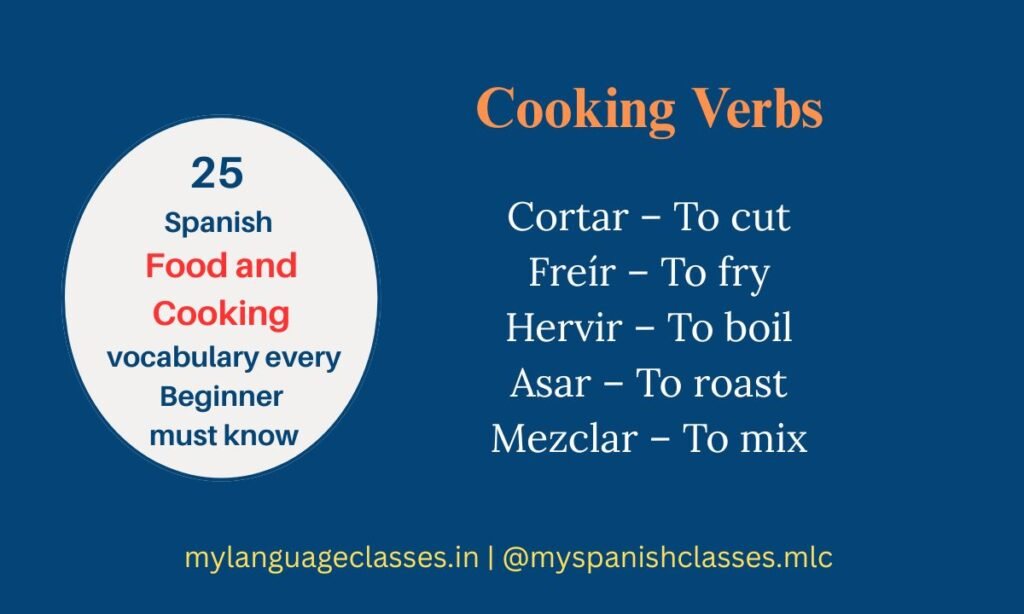
11. Cortar – To cut
👉 Corta las verduras en rodajas. (Cut the vegetables into slices.)
12. Freír – To fry
👉 Freímos los huevos en una sartén. (We fry the eggs in a pan.)
13. Hervir – To boil
👉 Hierve el agua antes de agregar la pasta. (Boil the water before adding the pasta.)
14. Asar – To roast
👉 Asamos el pollo en el horno. (We roast the chicken in the oven.)
15. Mezclar – To mix
👉 Mezcla todos los ingredientes bien. (Mix all the ingredients well.)
These verbs bring your Spanish food and cooking vocabulary for beginners to life. They’ll help you read recipes, follow cooking videos, or describe how you prepare your favorite dish.
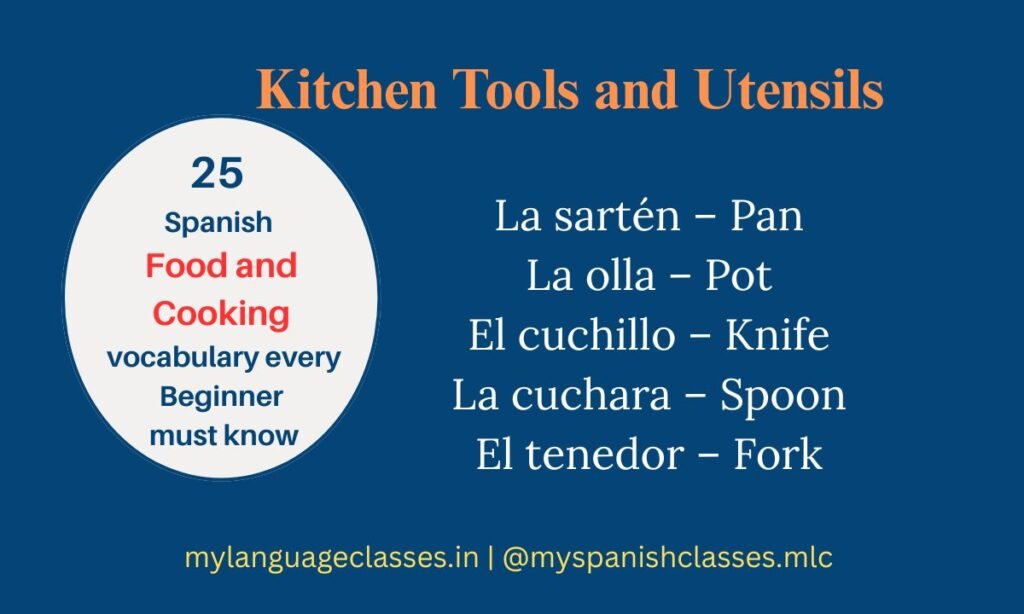
🍳 Kitchen Tools and Utensils (Los utensilios de cocina)
Cooking without tools is impossible! Learn these common kitchen items to make your vocabulary more practical.
16. La sartén – Pan
👉 Calienta la sartén antes de cocinar. (Heat the pan before cooking.)
17. La olla – Pot
👉 Usa una olla grande para hacer sopa. (Use a big pot to make soup.)
18. El cuchillo – Knife
👉 Necesitas un cuchillo afilado para cortar la carne. (You need a sharp knife to cut the meat.)
19. La cuchara – Spoon
👉 Remueve con una cuchara de madera. (Stir with a wooden spoon.)
20. El tenedor – Fork
👉 Come la ensalada con un tenedor. (Eat the salad with a fork.)
Knowing these words helps you understand recipes and communicate in any Spanish-speaking kitchen.
🍲 Common Dishes and Meals (Los platos y comidas comunes)
Now comes the most delicious part — dishes you’ll often hear about in Spain and Latin America. These words help you talk about food you’ll eat or cook.
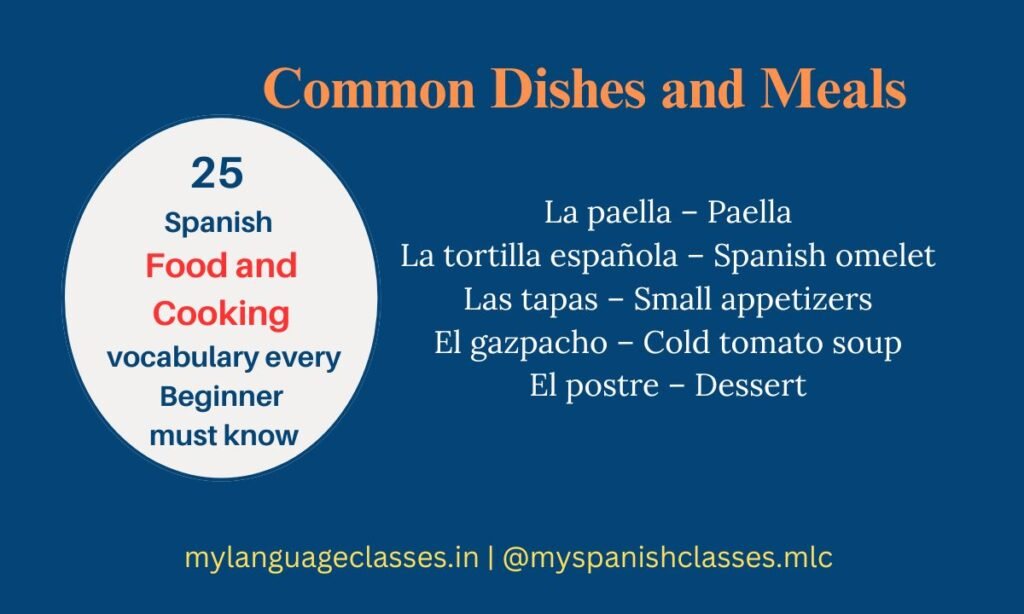
21. La paella – Paella
Spain’s most famous rice dish.
👉 La paella valenciana es muy popular en España. (Valencian paella is very popular in Spain.)
22. La tortilla española – Spanish omelet
Made with eggs and potatoes, loved across Spain.
👉 La tortilla española se sirve caliente o fría. (The Spanish omelet is served hot or cold.)
23. Las tapas – Small appetizers
Perfect for sharing with friends.
👉 Nos gusta comer tapas en el bar. (We like to eat tapas at the bar.)
24. El gazpacho – Cold tomato soup
Refreshing and ideal for summer.
👉 El gazpacho es una sopa fría muy refrescante. (Gazpacho is a very refreshing cold soup.)
25. El postre – Dessert
The sweetest way to end a meal.
👉 ¿Qué postre quieres después de la cena? (What dessert do you want after dinner?)
These dishes represent the diversity of Spanish cooking. Knowing their names makes travel and dining experiences far more enjoyable.
🥖 Spanish Food and Cooking Vocabulary Table
| Spanish Word / Phrase | English Meaning | Example Sentence (with Translation) |
|---|---|---|
| El pan | Bread | Comemos pan con cada comida. – We eat bread with every meal. |
| El queso | Cheese | Me encanta el queso manchego. – I love Manchego cheese. |
| La carne | Meat | No como mucha carne roja. – I don’t eat much red meat. |
| El pescado | Fish | El pescado fresco es delicioso. – Fresh fish is delicious. |
| Las verduras | Vegetables | Las verduras son importantes para una dieta equilibrada. – Vegetables are important for a balanced diet. |
| El aceite de oliva | Olive oil | Freímos las verduras en aceite de oliva. – We fry vegetables in olive oil. |
| La sal | Salt | Agrega una pizca de sal al gusto. – Add a pinch of salt to taste. |
| El ajo | Garlic | El ajo da mucho sabor a la comida. – Garlic gives a lot of flavor to food. |
| La cebolla | Onion | Cortamos la cebolla en trozos pequeños. – We chop the onion into small pieces. |
| El pimentón | Paprika | El pimentón dulce es típico en la paella. – Sweet paprika is typical in paella. |
| Cortar | To cut | Corta las verduras en rodajas. – Cut the vegetables into slices. |
| Freír | To fry | Freímos los huevos en una sartén. – We fry the eggs in a pan. |
| Hervir | To boil | Hierve el agua antes de agregar la pasta. – Boil the water before adding the pasta. |
| Asar | To roast | Asamos el pollo en el horno. – We roast the chicken in the oven. |
| Mezclar | To mix | Mezcla todos los ingredientes bien. – Mix all the ingredients well. |
| La sartén | Pan | Calienta la sartén antes de cocinar. – Heat the pan before cooking. |
| La olla | Pot | Usa una olla grande para hacer sopa. – Use a big pot to make soup. |
| El cuchillo | Knife | Necesitas un cuchillo afilado para cortar la carne. – You need a sharp knife to cut the meat. |
| La cuchara | Spoon | Remueve con una cuchara de madera. – Stir with a wooden spoon. |
| El tenedor | Fork | Come la ensalada con un tenedor. – Eat the salad with a fork. |
| La paella | Paella | La paella valenciana es muy popular en España. – Valencian paella is very popular in Spain. |
| La tortilla española | Spanish omelet | La tortilla española se sirve caliente o fría. – The Spanish omelet is served hot or cold. |
| Las tapas | Small appetizers | Nos gusta comer tapas en el bar. – We like to eat tapas at the bar. |
| El gazpacho | Cold tomato soup | El gazpacho es una sopa fría muy refrescante. – Gazpacho is a very refreshing cold soup. |
| El postre | Dessert | ¿Qué postre quieres después de la cena? – What dessert do you want after dinner? |
🍷 Using These Words in Real Conversations
It’s time to use what you’ve learned. Practice speaking out loud while cooking or watching food videos in Spanish. Combine verbs, ingredients, and dishes to form complete sentences.
Here are some examples:
- Hoy cocino paella con mariscos y verduras. (Today I’m cooking paella with seafood and vegetables.)
- Freímos las patatas y luego las mezclamos con huevos. (We fry the potatoes and then mix them with eggs.)
- ¿Tienes una sartén limpia para asar el pescado? (Do you have a clean pan to grill the fish?)
The more you speak these words, the faster they’ll stick in your memory.
🌍 Cultural Tip: Spanish Mealtimes and Dining Habits
When learning Spanish food and cooking vocabulary for beginners, understanding mealtime culture makes your learning richer.
Spaniards usually eat five times a day. Lunch (la comida) is the largest meal, often around 2 p.m. Dinner (la cena) happens late, between 9 and 10 p.m. Sharing food is a social tradition. Meals often last long because they’re about connection as much as food.
Learning food vocabulary helps you join those conversations naturally.
📘 Practical Learning Tips
To remember these words faster, try these methods:
- Label your kitchen items. Stick notes with Spanish words like la sartén or el cuchillo.
- Watch Spanish cooking shows. Shows such as Karlos Arguiñano en tu cocina teach context and pronunciation.
- Cook and speak. Follow a recipe in Spanish and say each step aloud.
- Review daily. Repetition builds confidence.
- Use flashcards or apps. They make vocabulary practice interactive and fun.
Consistency is the real secret ingredient!
🗣️ Mini Practice Exercise
Match the Spanish words with their meanings:
| Spanish | English |
|---|---|
| El pan | Bread |
| Freír | To fry |
| La cuchara | Spoon |
| El ajo | Garlic |
| La paella | Paella |
Try repeating the Spanish words aloud to reinforce pronunciation and memory.
🎯 Final Thoughts
Learning Spanish food and cooking vocabulary for beginners is one of the tastiest ways to improve your Spanish. These 25 words give you the power to talk confidently about what you eat, cook, and share.
Language learning works best when it connects with daily life. Food gives you that connection naturally. Keep practicing, keep tasting, and soon, you’ll find that Spanish isn’t just a language — it’s a flavor.
💬 Your Turn!
Which Spanish food word do you like most?
Share it in the comments below — and tell us which Spanish dish you’d love to try next!
📌 Keep Learning With Us
Learning a language becomes easier when you have the right support and resources. Don’t stop here — continue your journey with My Language Classes:
📺 Subscribe to our YouTube channel for grammar lessons, examples, and practice videos.
📸 Follow us on Instagram for daily tips, exercises, and quick grammar reminders.
🌐 Connect With Us and explore all our platforms and learning communities.
📚 Check out Our Books for structured guides and practice resources for Spanish.
👉 Want to go deeper? Explore our Beginner Spanish Lessons or jump straight to Nouns and Articles in Spanish Grammar for more lessons and practice.
Related Posts
25 Spanish Holidays and Celebrations Vocabulary Every Beginner Must Know
25 Spanish Describing People (Physical Appearance) Vocabulary Every Beginner Must Know
25 Spanish Emotions and Feelings Vocabulary Every Beginner Must Know
25 Spanish Health and Medical Vocabulary Every Beginner Must Know
25 Spanish Shopping Vocabulary Every Beginner Must Know
📬 Subscribe for Free Spanish Grammar Lessons
Want to keep improving your Spanish grammar step by step? Subscribe now and get access to:
📖 Free lessons delivered straight to your inbox.
📝 Grammar rules explained with examples and exercises.
🎯 Study tips to help you prepare for DELE exam
👉 Enter your email below and start learning smarter today!
© 2025 My Language Classes · Privacy Policy

Vikas Kumar is the founder of My Language Classes, a language learning platform dedicated to helping learners develop practical communication skills in Spanish, Japanese, and English through comprehensive grammar guides, structured learning resources, books, and evidence-informed educational content.
At My Language Classes, we believe that successful language learning is built on clarity, consistency, meaningful practice, and a deep understanding of how languages work. Every article is carefully researched and created to simplify complex concepts, provide practical guidance, and help learners develop confidence through real-world communication.
Inspired by the principles behind How Language Learning Really Works, our mission is to make high-quality language learning accessible to learners around the world by providing accurate, trustworthy, and comprehensive resources that support lasting progress, lifelong learning, and meaningful communication.
Leave a Reply