

More Than Just Words on a Page
Have you ever considered learning a second language but couldn’t decide which one? Or maybe you thought Spanish was just another high school requirement, a checkbox on a resume, or a tourist tool for your next vacation? Think again. Spanish is not only one of the most widely spoken languages in the world but also one of the most useful in everyday life, career development, cultural understanding, and even brain function. In this blog post, we’ll explore why learning Spanish is more valuable than most people realize, and how it can open unexpected doors in your personal and professional life.
1. Global Communication: A Language That Truly Travels
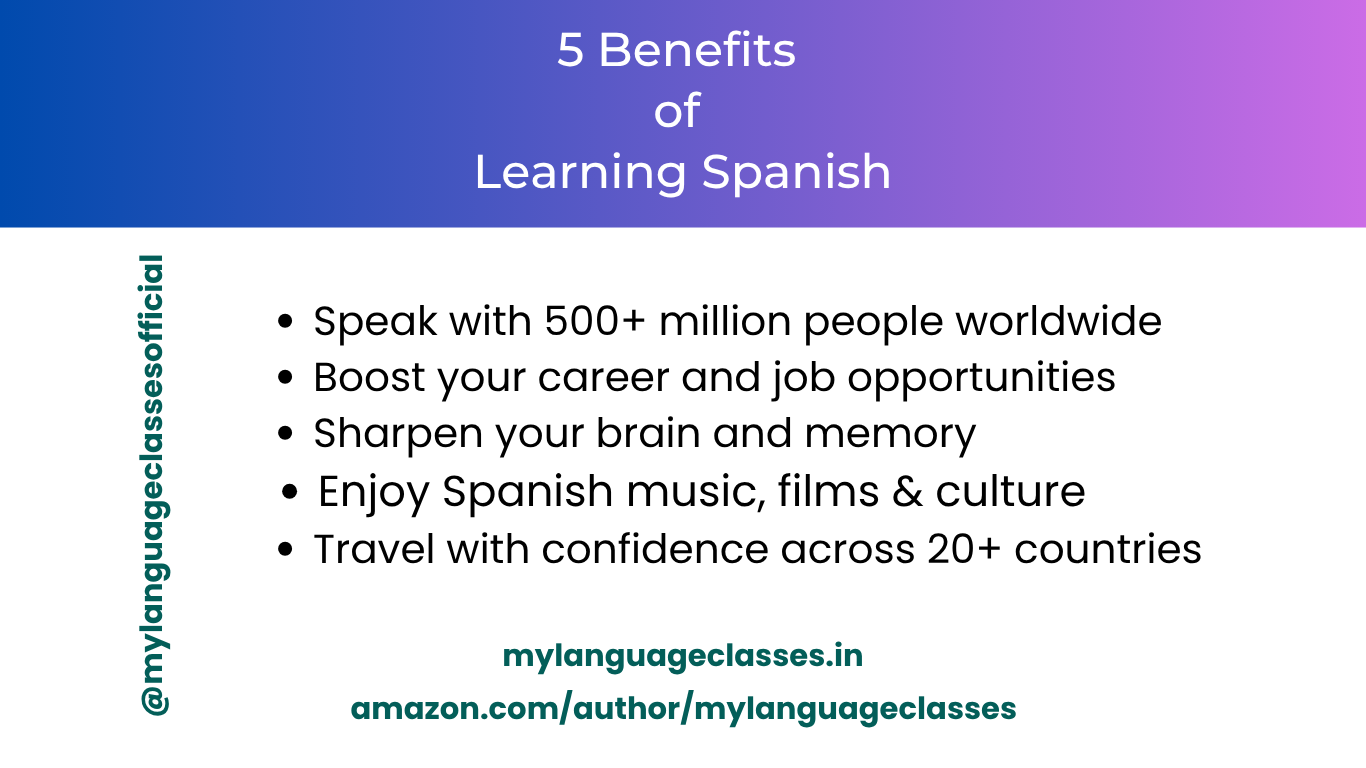
1.1 Spanish Is Spoken by Over 500 Million People
Spanish is the second most spoken native language in the world after Mandarin Chinese. It is an official language in 20+ countries, spanning Latin America, Europe, and parts of Africa. Learning Spanish gives you direct access to a global network of speakers.
1.2 It’s the Second Most Spoken Language in the U.S.
In the United States alone, there are over 41 million native Spanish speakers and another 12 million bilingual speakers. Being able to speak Spanish in the U.S. isn’t just useful; it’s often essential in areas like healthcare, education, retail, and public services.
1.3 Easier Travel and Deeper Cultural Exchange
Speaking Spanish makes travel more meaningful in Spain, Mexico, Colombia, Argentina, Peru, and beyond. Instead of relying on translations or guided tours, you can connect directly with locals, understand traditions firsthand, and even avoid tourist traps.
2. Career Advancement: A Skill That Pays Off
2.1 A Competitive Edge in the Job Market
Bilingual employees are in high demand across many sectors including international business, customer service, healthcare, law enforcement, and tourism. Spanish is often the most requested second language by employers in the U.S. and Europe.
2.2 Increased Earning Potential
Studies show that bilingual employees can earn up to 5-20% more per hour than monolingual peers. Even if your role doesn’t require Spanish, it’s often seen as a strong asset that demonstrates cultural awareness, adaptability, and commitment.
2.3 Entrepreneurial & Freelancing Opportunities
From online tutoring to translation services and bilingual content creation, Spanish opens up a range of entrepreneurial avenues. It’s especially valuable for digital nomads, freelancers, and small business owners targeting global audiences.
3. Cognitive & Personal Growth: A Workout for Your Brain
3.1 Sharper Thinking and Better Memory
Learning a language enhances brain function. Studies have found that bilingual people have better memory, problem-solving skills, and focus. Learning Spanish can be a great mental exercise, especially as we age.
3.2 Delayed Onset of Age-Related Diseases
Research has shown that bilingual individuals may experience a delay in the onset of Alzheimer’s and dementia by several years compared to monolingual individuals. Learning Spanish isn’t just practical — it’s brain-friendly too.
3.3 Boost in Confidence and Communication
Mastering a new language boosts self-esteem. You begin to see yourself differently — as someone capable, globally minded, and culturally sensitive. Even basic conversational skills can make you feel more empowered.
4. Cultural Richness: A Window into Diverse Worlds
4.1 Access to Literature, Film, and Music
Understanding Spanish gives you direct access to the works of Gabriel García Márquez, Pablo Neruda, and Isabel Allende. You can appreciate the music of Shakira, Bad Bunny, and classical flamenco in its full meaning. Spanish films and telenovelas become much more enjoyable when you understand the dialogue firsthand.
4.2 Deep Understanding of Latin and Hispanic Cultures
Learning the language means learning about holidays like Dia de los Muertos, the nuances of Spanish cuisine, and regional customs. You’ll gain insight into cultural values like “familia,” “respeto,” and “honor” that shape how people interact.
4.3 Improved Interpersonal Relationships
If your friends, neighbors, colleagues, or partner speak Spanish, learning the language allows you to form stronger, more authentic relationships. It shows respect, interest, and effort — values appreciated in any culture.
5. Learning Made Easy: Spanish Is Beginner-Friendly
5.1 Phonetic and Logical Structure
Spanish pronunciation is largely phonetic, meaning you say the words the way they’re spelled. Compared to languages like French or Chinese, this makes Spanish easier to grasp for beginners.
5.2 Grammar That Makes Sense Over Time
While verb conjugations may seem tricky at first, Spanish grammar follows consistent rules. Once you get the basics, patterns start to appear and learning accelerates.
5.3 Tons of Resources and a Supportive Community
From YouTube channels and apps to local conversation groups and free online courses, the support for Spanish learners is immense. You are never alone in your journey.
6. Common Concerns and How to Overcome Them
6.1 “I’m Too Old to Learn a Language”
Not true! Adults often bring discipline, focus, and life experience to language learning. Consistent effort, not age, determines success.
6.2 “I Don’t Have Time”
Even 10 minutes a day can make a difference. Use downtime wisely — listen to a Spanish podcast on your commute or revise flashcards while having your morning coffee.
6.3 “I’m Afraid of Making Mistakes”
Mistakes are essential to learning. Spanish speakers are often encouraging and appreciative when you try. Progress, not perfection, should be your goal.
Conclusion: Open Doors, Change Perspectives
Learning Spanish is so much more than memorizing vocabulary or passing exams. It’s about opening up your world to new perspectives, people, and possibilities. Whether you’re looking to boost your career, enrich your travels, connect more deeply with others, or simply challenge yourself, Spanish is a wise and rewarding choice.
So, the next time you wonder whether learning Spanish is worth it, remember: it’s more useful than you think.
Ready to start your journey?
Learn Spanish with My Language Classes
👉Explore more Spanish learning tips, resources, and personalized lessons on our blog: My Language Classes
👉Follow us on Instagram: @mylanguageclassesofficial
👉👉Books for learning Spanish by My Language Classes
📚 Continue Learning Spanish

Vikas Kumar is the founder of My Language Classes, a language learning platform dedicated to helping learners develop practical communication skills in Spanish, Japanese, and English through comprehensive grammar guides, structured learning resources, books, and evidence-informed educational content.
At My Language Classes, we believe that successful language learning is built on clarity, consistency, meaningful practice, and a deep understanding of how languages work. Every article is carefully researched and created to simplify complex concepts, provide practical guidance, and help learners develop confidence through real-world communication.
Inspired by the principles behind How Language Learning Really Works, our mission is to make high-quality language learning accessible to learners around the world by providing accurate, trustworthy, and comprehensive resources that support lasting progress, lifelong learning, and meaningful communication.
Leave a Reply